
 FR
FRVaping dried cannabis flower versus smoking: timing, differences and risks
Dry-herb vaping avoids combustion, but it does not make inhalation risk-free and should not be confused with concentrated cartridges.
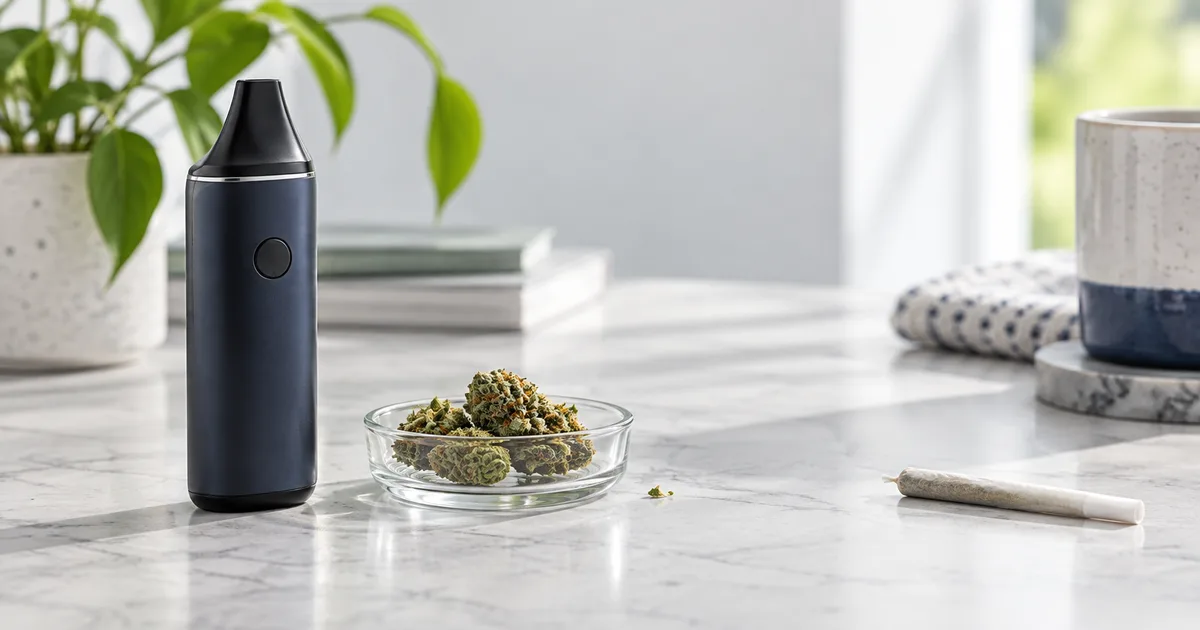
Smoking and vaping are both fast inhaled routes, but the processes differ. Smoking burns plant material and creates smoke. A dry-herb vaporizer heats the material without combustion to produce an aerosol. That difference reduces some lung risks without eliminating them.
Why Health Canada does not recommend smoking
Cannabis smoke contains many of the same harmful and cancer-causing substances found in tobacco smoke. Health Canada associates combustion with risks of bronchitis, lung infections, chronic cough and mucus buildup. A bong or water pipe cools the smoke but does not make it safe.
What vaping changes
Vaping avoids combustion smoke. Health Canada describes it as less harmful to the lungs than smoking while noting that aerosol may contain harmful substances and metals from the device. A recent systematic review also concludes that route-specific effects remain difficult to quantify confidently because of limitations in the available studies.
Dry flower and concentrated cartridges: an essential distinction
A dry-herb vaporizer heats plant material. A cartridge or pen may instead heat a highly concentrated extract. High THC concentrations change the risk of intoxication, anxiety, dependence and psychiatric effects. Legal source, composition and device must be checked; never inhale a liquid or oil that was not designed for inhalation.
Onset and duration
For both smoking and vaping, Health Canada indicates onset within seconds or minutes, a possible peak after 10 to 30 minutes and a usual duration of 2 to 4 hours. Impairment may persist longer. Rapid onset makes the response easier to observe, but it can also make it easy to exceed the intended amount quickly.
When inhalation calls for extra caution
Health Canada advises against smoking or vaping with asthma or lung disease. Cardiovascular conditions, pregnancy, breastfeeding, some mental-health histories and medication interactions also require professional discussion. Avoiding combustion does not make vaping universally appropriate.
Reduce risk if this route is selected
- Device — use a suitable device, follow instructions, clean it and follow battery-safety guidance.
- Product — choose a regulated product and know its THC and CBD content.
- Dose — follow the agreed number of inhalations and pause to observe the effect before continuing.
- Environment — do not share the mouthpiece, avoid exposing others and never drive after use.
How Coverleaf supports the choice
The practitioner assesses clinical risks and decides whether medical cannabis is appropriate. The team can then help compare authorized formats, read concentrations and structure a treatment journal. The goal is not to find the strongest product, but a measurable option that fits the clinical plan.
Is vaping flower safer than smoking it?
Is a dry-herb vaporizer the same as a cartridge pen?
Can I vape if I have asthma?
Ask the Coverleaf team your question
Leave only your contact details and the best time to reach you. Requests received during business hours get a same-day callback. This public form asks for no sensitive medical information; eligibility and any prescription remain subject to the applicable assessments and approvals.
Ready to take the first step?
Start your request online without a family-doctor referral. A licensed practitioner then determines the assessment format required for your situation.
Talk to a practitioner
Submit your request online today. The decision always rests with the practitioner after assessment.
General information, not medical advice. Coverleaf does not guarantee a prescription or coverage. For adults of legal age. In an emergency, call 911.