
 FR
FRMedical cannabis oil: understanding concentration, use and onset
Oil can make a measured dose easier, but its concentration, route and timing need to be understood before it is used.
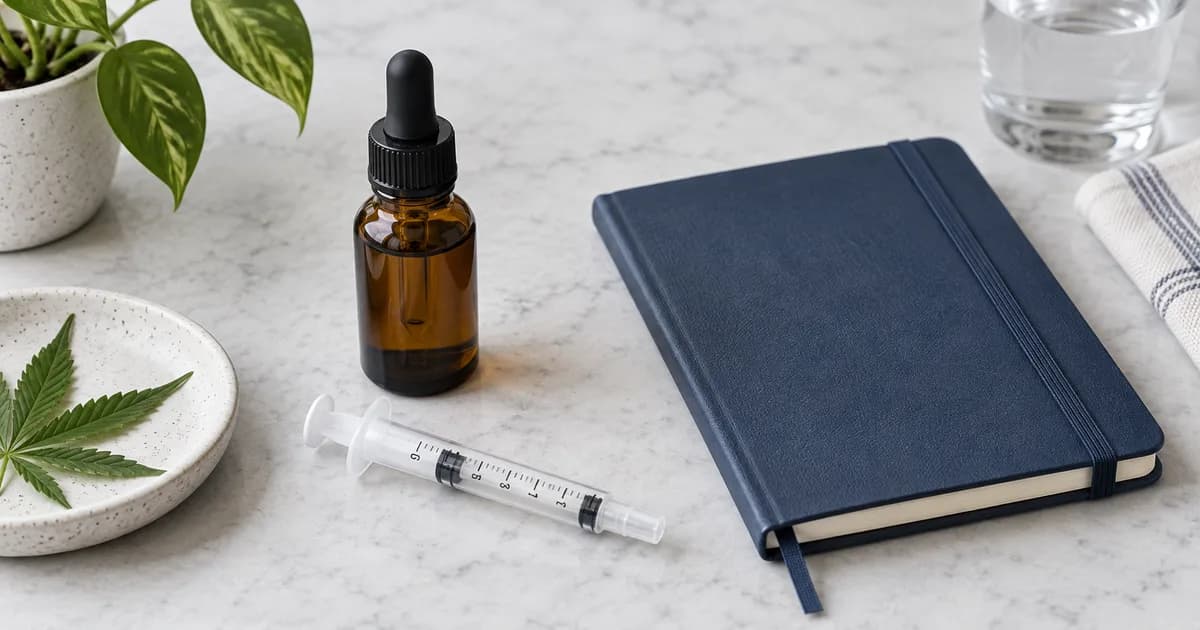
Cannabis oil is an extract containing THC, CBD or both in a carrier oil. Two bottles with the same volume can have very different concentrations. The product name or number of drops is therefore not enough for comparison: read the amount of each cannabinoid expressed in milligrams per millilitre.
Start with the label
Find the THC and CBD concentrations, total volume and manufacturer instructions. A volume in millilitres can then be converted to milligrams from that concentration. A graduated oral syringe is generally more repeatable than a visual estimate. Do not assume that a drop from a new bottle equals a drop from the previous product.
Swallowed or used under the tongue: different profiles
Swallowed oil follows the digestive route. Health Canada says effects from eaten or drunk products may begin in 30 minutes to 2 hours, peak after 2 to 4 hours and last 4 to 8 hours. A product actually dissolved under the tongue may begin sooner, in about 15 to 40 minutes, and last longer than inhalation. In practice, some oil held in the mouth may also be swallowed, making the response variable.
Why meals and routine matter
Oral absorption varies with formulation, food in the stomach, other oral medications and the individual. To interpret the response more clearly, Health Canada recommends taking the product at a similar time and under similar conditions, such as consistently with or without food. A journal can connect dose, time, meal, observed effect and any adverse effect.
Avoid taking a second dose too soon
The oral delay is the main source of error. No immediate effect does not mean the dose is insufficient. Adding THC before the first dose has reached its full effect can cause stronger and longer impairment than intended. Any change should follow the practitioner's plan and the gradual titration approach agreed with them.
THC, CBD and interactions
THC can impair attention, coordination and driving ability. CBD is not necessarily free of interactions: it can alter the effects of some medications, and a CBD product may contain THC. Tell the practitioner and pharmacist about every medication, natural health product and substance used before starting or changing an oil.
A simple tracking method
- Product — record the name, lot and THC and CBD concentrations in mg/mL.
- Dose — record the exact volume in mL and time taken.
- Context — note meals, other medications and route used.
- Response — track onset, duration, daily function and adverse effects.
Storage
Keep oil in its original child-resistant packaging, out of the sight and reach of children and pets. Do not transfer it into a food container. Follow the storage conditions and date supplied by the authorized seller.
How long does cannabis oil take to work?
Does every drop contain the same dose?
Can I drive after taking CBD oil?
Ask the Coverleaf team your question
Leave only your contact details and the best time to reach you. Requests received during business hours get a same-day callback. This public form asks for no sensitive medical information; eligibility and any prescription remain subject to the applicable assessments and approvals.
Ready to take the first step?
Start your request online without a family-doctor referral. A licensed practitioner then determines the assessment format required for your situation.
Talk to a practitioner
Submit your request online today. The decision always rests with the practitioner after assessment.
General information, not medical advice. Coverleaf does not guarantee a prescription or coverage. For adults of legal age. In an emergency, call 911.